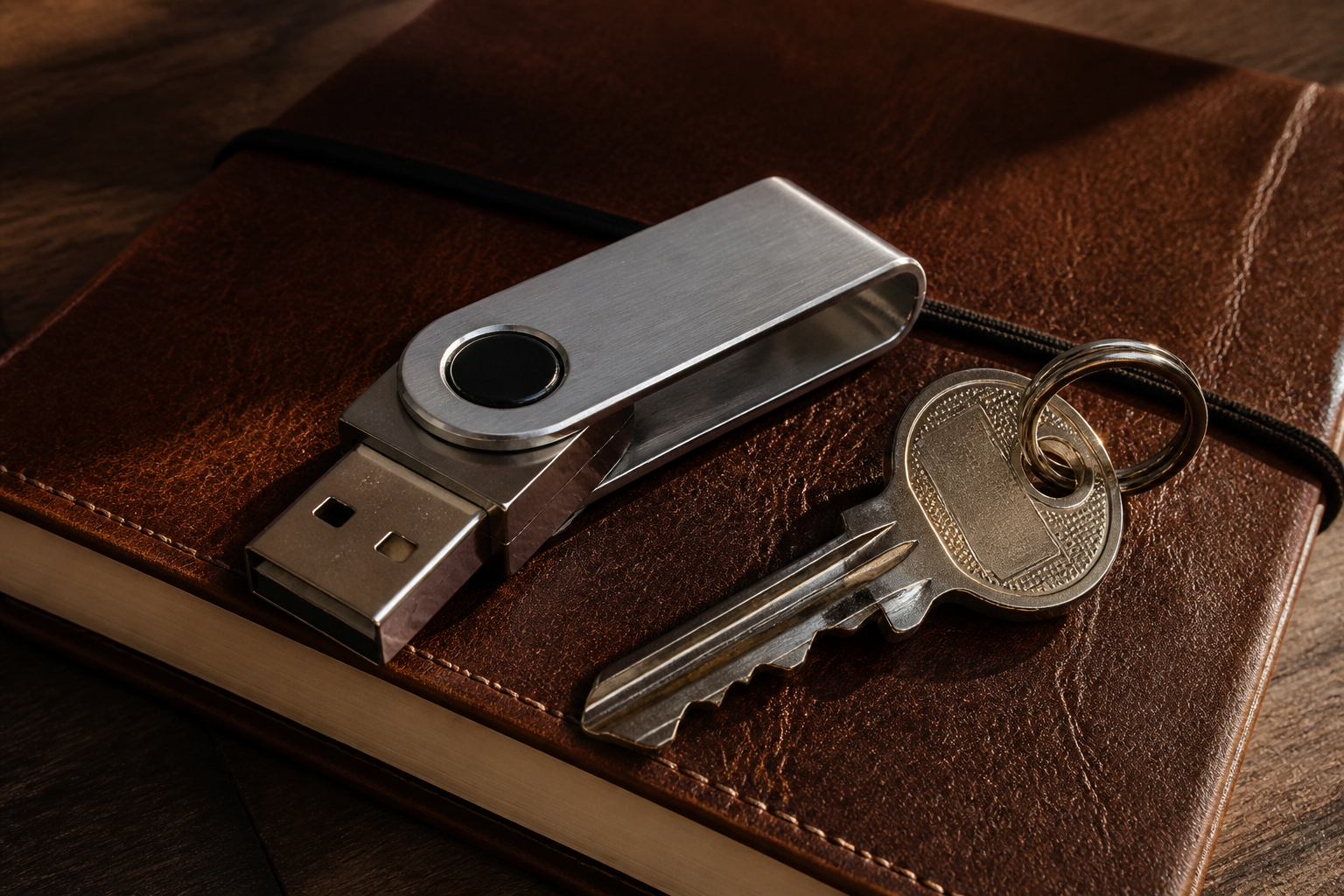
What is a crypto wallet? It is software or hardware that holds the keys that control coins on a blockchain. It is not a leather billfold. If someone has your keys, they have your coins. That is why beginners should learn the concept before they chase gadgets.
Keys, not coins in a drawer
On a blockchain, “your” bitcoin is an entry the network agrees on. The wallet stores the secret that lets you move it. Lose the secret without a backup and the coins are gone. Share the secret and they can be stolen.
Custodial versus non-custodial
A custodial setup means a platform holds crypto for you as an account balance. Non-custodial means you hold the keys. Custodial is how most people start on a regulated broker. Non-custodial demands backups, updates and zero tolerance for phishing.
Hardware wallets
A hardware wallet keeps keys on a dedicated device. Useful for large, long-term self-custody. Unnecessary for a first small purchase on a platform you already verified — and dangerous if you buy a used or fake device.
What beginners should do first
Open a real account, enable 2FA, buy a modest amount of a liquid asset, and learn the interface. Add self-custody only when you can explain seed phrases without copying a YouTube comment.
Wallets and a wider portfolio
If crypto sits beside stocks and metals, a single professional account can be the operational centre. Complexity is not the same as safety.